EYFS Mission Statement
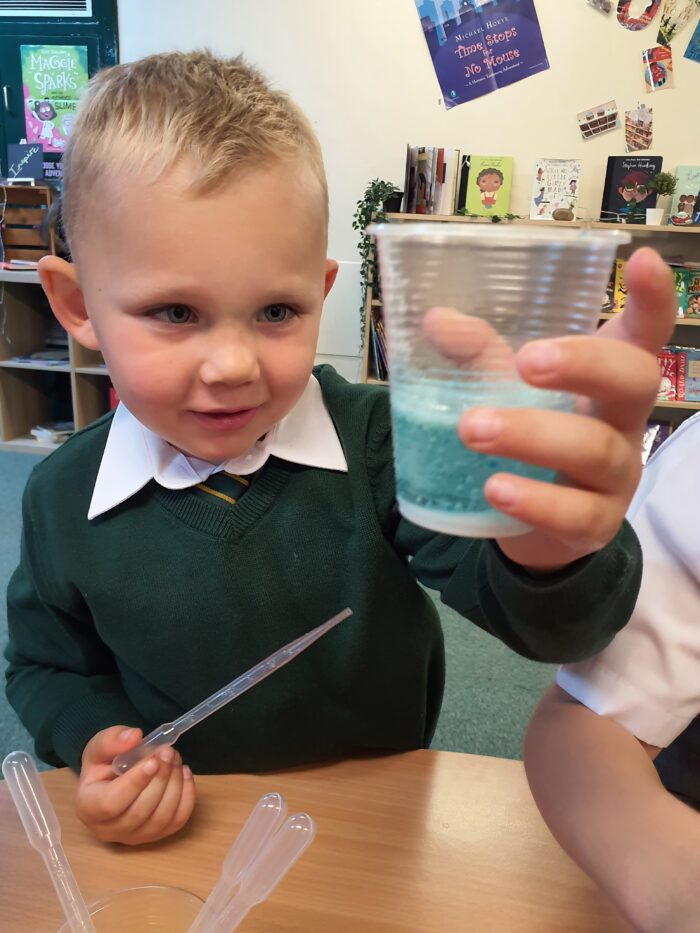
At RSJB, children are at the heart of everything we do. Child-initiated learning is interwoven with purposeful adult interactions to promote learning through play. Our Early Years environment encourages collaboration and places a strong emphasis on oracy.
We are passionate about ensuring that every child is happy, confident, and kind, with a genuine love for learning.
We aim for all children to develop holistically, nurturing a positive attitude towards school and learning. Through an engaging, play-based curriculum, we maximise opportunities for oracy within both child-led and adult-guided experiences, supported by warm and skilful adult interactions.
All learning at RSJB is purposeful and meaningful, making full use of both our indoor and outdoor environments. We believe that our EYFS provides the solid foundations on which children continue to build throughout their school journey and beyond.
What is the Early Years Foundation Stage?
The early years foundation stage (EYFS) statutory framework sets standards for children’s learning, development and welfare from birth to five years old. These standards, which must be met by school and childcare providers, were created to make sure that young children develop and learn safely.
Play and more importantly, learning through play, is an essential part of the early years foundation stage. As children move into the reception year, a greater emphasis is placed on learning skills that will support and prepare children for the learning expectations in year one.
The EYFS is based upon four guiding principles:
- Every child is a unique child who is constantly learning and can be resilient, capable, confident, and self-assured.
- Children learn to be strong and independent through positive relationships.
- Children learn and develop well in enabling environments with teaching and support from adults, who respond to their individual interests and needs and help them to build their learning over time. Children benefit from a strong partnership between practitioners and parents and/or carers.
- Importance of learning and development. Children develop and learn at different rates.
The EYFS ensures that children learn and develop well and are kept healthy and safe. It promotes teaching and learning and gives children the wide range of knowledge and skills that provide the right foundation for good future progress through school and life.
The EYFS builds on the learning that children will have gained already from their families and home environment and continues as a partnership between practitioner, parent and child.
What are the EYFS Seven Areas of Learning and Development?
These are what the children will be learning throughout the EYFS. At our school we base all our learning on ‘themes’ or ‘topics’ throughout the year, all are thoroughly planned and implemented through the 7 areas of learning.
- Personal, Social and Emotional Development (PSED)
- Communication and Language (C+L)
- Physical Development (PD)
- Literacy (L)
- Mathematics (M)
- Understanding the World (UTW)
- Expressive Arts and Design (EAD)
Personal, social and emotional development, communication and language, and physical development are the prime areas of learning and development in EYFS. These areas are important as they form the foundations upon which all further learning is built.
Literacy, mathematics, understanding the world, and expressive arts and design are the specific areas of learning and development in EYFS. It is through these areas that the prime areas are further applied and strengthened.
Each of these areas is as important as the other and all are interwoven. At the end of the reception year, children are assessed against the Early Learning Goals (ELGs). The purpose of these assessments is to ascertain whether children have achieved the expected level of progress within each area of learning and development.
How will the children be learning at our school?
Children learn through a variety of experiences to help them to learn and make progress. All children learn best from experiences that are suitable for their stage of development, rather than their age alone. This is carefully planned, implemented and assessed through thematic learning. We use books / stories to develop learning across each week based on our themes / topics for the half term.
At Royston St. John’s, we recognise that the environment plays a key role in supporting and extending the children’s development. This begins by observing the children and assessing their interests, development, and learning, before planning challenging but achievable activities and experiences to extend the children’s learning. At Royston St. John’s, it involves offering a rich and varied environment which is safe, secure, and challenging to support children’s learning.
Useful Links
Non-statutory curriculum guidance for the early years foundation stage
The-Early-Years-Foundation-Stage-EYFS-2021-A-guide-for-parents-and-carers-2.pdf